


And now, we get to the interesting part: how to put those principles into action and start enabling brands (and enterprise more generally) to thrive.
To recap, the principles that guide this approach to growing and scaling Africa-based enterprises (and in this specific case, cultural and consumer-oriented enterprises) are:
Operating in harmony as an intentional ecosystem, with the entrepreneurs, the value creators, at the center
Creating the space and providing what’s needed for entrepreneurs to build and pull in what they need for the enterprise to thrive
Focusing on sustainable, inclusive growth trajectories that orient enterprises towards longevity
To move to action, this is where a human-centered (or in this case, an entrepreneur-centric) design approach can be useful, and what was the focus of the second half of my research1. The goal was to provide a starting point for stakeholders, and demonstrate how to develop a deep understanding of who the entrepreneur is - because genuine and intentional ideation and iteration can only happen with that deep understanding. In my case (and as mentioned at the beginning of this series), I centered consumer brand entrepreneurs, a subset of that intersection of commerce and culture, and narrowed the scope further to those based and operating in Nigeria (building off of the research done in Part 1). Through that lens, the question that I sought to address was:
How might we enable consumer goods & brand entrepreneurs based in Nigeria to create more value, capture more value, and thrive overall?
Through the approach and the insights generated from this research, I want to show what the output could look like, and more specific to underlying motivation for all of this, build a foundation for realizing “Africa to the World” through brand.
A Quick Note on the Approach:
Now, there is a lot of content out there on human centered design, design thinking, or other related content on the process itself, its benefits, as well as some valid critiques on how it's currently framed. What matters most and what I want to focus on is that the way to move from principle to action and address the barriers that entrepreneurs face in a design-led way is to:
Understand, Create, & Test
In an iterative manner, where you are constantly in dialogue with not only who you’re looking to serve, but also with others within the ecosystem that can play a role in the shift.
The focus here (and for my research at the time) was in Understanding and creating a foundation on top of which solid, highly resonant creation can happen.
To build that understanding, I conducted 1-on-1 interviews with entrepreneurs, and did ethnographic research on ground; being in conversation and partnership with operators and other stakeholders and getting a real sense of their operational challenges and lived experience - in a process that spanned over two years. In general, taking an intimate approach and combining it with more common, large-scale methods like surveying (which was the typical and usually only approach I saw in past research, which doesn’t capture the needed nuance in my opinion). Together, all of this could be powerful in building an even more holistic picture.
Building on this, I sought to capture and frame things around these operators’ desires, motivations, current habits, and emotions. This comes back to the the theme of Part 1 and understanding the gaps in current enterprise development activities in Nigeria more broadly: we need to understand where does the entrepreneur want to go (their desires), why do they want to go there (their motivations), and what are they currently doing and dealing with that either helps or hurts their ability to get there (their habits and emotions).
Lastly, with the second and third principles in mind, the questions I asked and observations I especially took note of were focused on understanding their experience and (potential) ability with high-impact, or Gazelle-like characteristics by framing things against these four main themes:
How oriented are they to the market they target like, and what is their current experience with generating and sustaining demand?
How innovative are they and their operations (especially when it comes to infrastructure)?
What is the quality of their business networks and their ability to access resources, especially capital? And,
What are their current experiences with people development, team building, and ultimately becoming more decentralized over time?
By framing the research in this way, I wanted to make that connection from understanding current state to driving towards the ideal more tangible - and product actionable insights that can get things going.
The Brand Entrepreneur: Who They Are
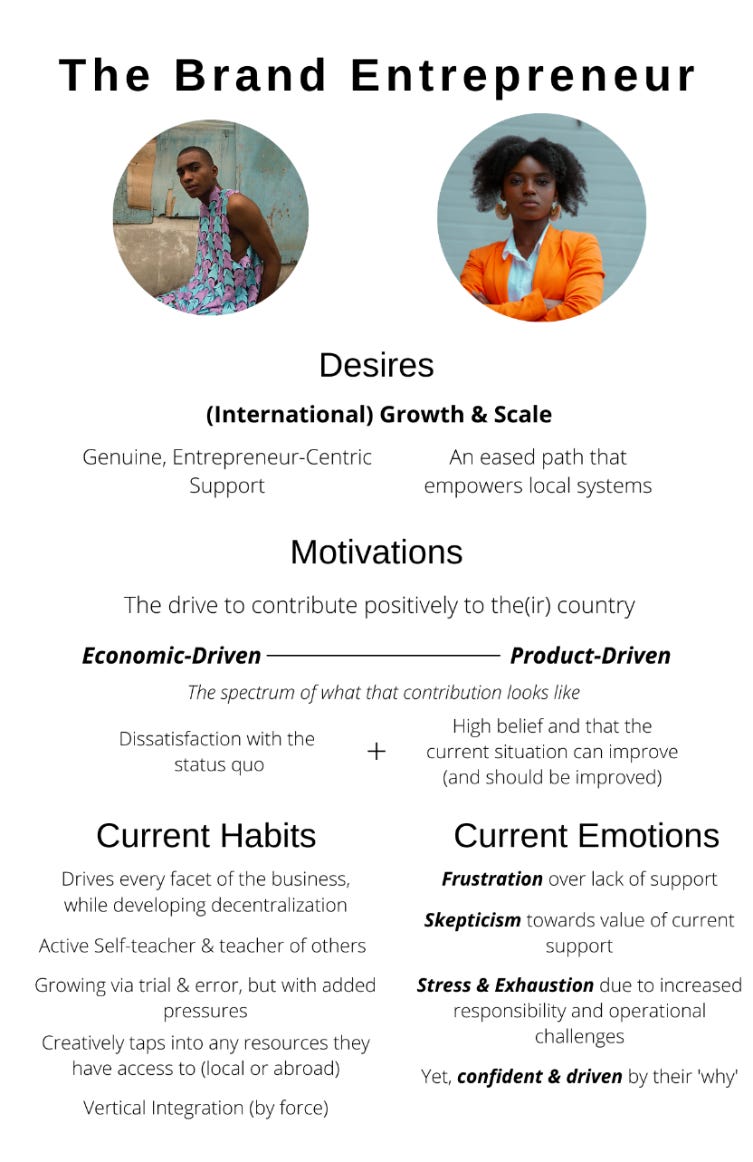
Figure 1: ‘The Brand Entrepreneur’ Persona from my thesis
To start things off, I want to walk through the persona developed from this first phase of Understanding (one way to capture and represent the learning from this part of the process). With this, the desires, motivations, habits, and emotions of this group can be more easily digested and the voice of the entrepreneur can always be present in some way (especially if being in constant dialogue with the creators themselves isn’t possible).
Desires
For the entrepreneurs and brand owners in this space, the ultimate desire they have is to achieve genuine growth and scale of their businesses. Not much of a surprise, this desire for growth and scale isn’t limited to local markets, but also includes a true international presence as well. It’s clear that ‘Africa to the World’ (and in this specific case, ‘Nigeria to the World’) is very much top of mind, and these creators intend to use their brands and businesses as vehicles to make that happen.
It’s important to emphasize also that this desire isn’t a desire to achieve growth and scale by any means necessary. Just as it is important to them to take their brands to new heights, it is just as important for them to do it in a way that elevates and empowers the local ecosystems that they’re a part of. They see their brands as a means to create value for both themselves and their spaces and communities.
Motivations
What motivates these desires comes from a shared drive to contribute to their space in a positive manner, though how that drive manifests is best captured as a spectrum between being economic driven versus more product driven.
Being economic driven equals seeing brand as just means to the end of creating, capturing and bringing value to their community. As a result, all actions are done through this lens. Having high-value job creation as an explicit goal, seeking international scale to unlock the economic potential that can come from exporting, seeking to partner with or build out local supply chains to ensure value retention - all of it is done with the economic benefit in mind.
On the other end, being product driven means being more focused on how brand can shift narratives of what can come from Nigeria (and the Continent more broadly), specifically through the quality of their product. How people view and perceive the product and the space(s) it comes from, what people imagine when they hear the name of those spaces, its people, etc. That’s the focus - with an understanding that positive perception and associations opens doors and drives willingness to pay (which again equals more value capture, ideally).
Regardless of where entrepreneurs fall on that spectrum, the critical thing is that both ends (and anywhere in between) are very much aligned with the goal of improving things through their businesses and recognize the importance of scale to do that.
I want to call-out that these desires and motivations are really just expressions of ‘Africa to the World’ - and should be the same desires and motivations of the entire ecosystem. The fact that these things aren’t shared across the ecosystem is what frustrates entrepreneurs the most, and is a huge factor for their desire for a path forward that truly centers them.
Current Habits & Emotions
Moving to the current realities (really, frustrations) expressed by current consumer good operators, their habits demonstrate that they are more than willing to be creative and resourceful for the sake of their business thriving and achieving their goals. What was common throughout was the openness to any sort of genuine support that can enable their desire for (international) scale and growth.
The entrepreneurs I connected with also saw being innovative and pulling in structure as ‘necessary evils’ - understanding that they need to operate in spite of the current conditions they find themselves in. This, as you can imagine, creates a lot of frustration and stress, especially when coupled with the success of their business operations being over-reliant on them individually. And while having a more decentralized business is valued and desired, a lot of these operators end up making do with what they can and shoulder most (if not all) of the responsibility due to inaccess to quality networks and resources, and/or the skepticism developed over time due to past disappointments.
It’s through this dichotomy between what’s truly needed to achieve their desires and their current realities they face that the needs of these entrepreneurs become clear.
The Brand Entrepreneur: Insights
Building on the persona, I’ll share the insight statements I put together, which was helpful in framing key needs and current circumstances in an actionable way with some context. From these needs, the focus then becomes:
‘What are the sort of things that we can do to address and act on these insights, given our understanding of who the entrepreneur is?’
Will add some commentary and talk about the implications of addressing these needs as I go, but the real aim is just to share these insights and open things up for discussion, follow up, etc..
Access to Financing & Resources (i.e. Business Networks)
When it comes to financing and access to resource networks more broadly, the brand entrepreneur:
…seeks financial resources that are genuinely accessible and flexible to help ease their operational pressures and accelerate their growth
…is willing and able to be creative in order to get the required capital and resources they need to survive (and hopefully thrive).
…desires networks to the right (genuine) people/pool of resources, yet knows that this is (too) entirely dependent on who they are able to connect and pull together on their own.
The key here is improving access in ways that reduce the need for entrepreneurs to be creative in the first place. For many of the entrepreneurs that I connected with, they were stuck between two undesirable options: either try to force fit themselves into venture capital money which had its biases (mentioned in Part 1), or go for traditional bank loans and supposedly ‘specialized’ funding sources that still had unrealistic expectations around cost of capital, time horizon, and requirements.
Now for some, and tying in the third point, they were able to work their way around this due to their personal background and access to networks and resources internationally which eased things to a certain degree. But the thing is, for brands to really thrive, for ‘Africa to the World’ having a better chance at being a sustained concept, more equity is needed and entrepreneurs should be able to have a shot that’s as independent as possible from their personal privileges - which creates the space for some potentially interesting solutions.
Infrastructure Pulling
On infrastructure, brand entrepreneurs:
…see infrastructure as something that they need to develop and pull in themselves to grow and scale their business the way they want to, again due to the lack of options to outsource or rely on outside of their immediate scope.
…seek to first augment what’s currently available, then build from scratch as a secondary option, as efficiency and creating more time to spend on growing the business is the true goal.
…aim to leverage local sources of infrastructure as best they can but are ready to weigh their options and consider leveraging international sources given how much they value effectiveness and quality, even though looking internationally is not ideal for multiple reasons.
While brand entrepreneurs understand the need to innovate and build out their own infrastructure given current circumstances, the key is that this isn’t desired at all. On top of that, doing so takes considerable energy away from other critical activities needed to reach the scale they desire.
While there’s value in being as vertically integrated as possible, to be real this isn’t feasible (nor really efficient) for everyone to pursue. Because of this, I’d call out the real opportunity being other entrepreneurs to come in and provide potential “infrastructure-as-a-service” type businesses as a desirable alternative for entrepreneurs, especially if it involves working with and improving local ecosystems (which has the benefit of both aligning with the brand entrepreneur’s goal and helping avoid additional costs and risks associated with relying too heavily on outside resources).
Talent & Organization
From how brand entrepreneurs choose to build their own infrastructure, or how they focus heavily on talent, the why behind it all is being able to deliver quality. Quality, and how it impacts value capture (especially abroad), is always top of mind for these operators , and having a team where everyone contributes towards and can deliver repeatable quality without heavy reliance on the brand entrepreneur is the ideal. In this context, brand entrepreneurs:
…are willing (and have been willing) to take on the responsibility of training their employees to standard, especially because of the dearth of talent that exists in the market. At the same time they..
…need resources to not only develop their staff, but also develop themselves to further maximize their success. And lastly they…
…are extremely open minded to leverage any best practice or perspective on talent and organization development where the value is clear, as they are acutely aware of the positive relationship between investing in talent development and the success of their business.
Similar to infrastructure, the true ideal is alleviating as much pressure as possible - enabling businesses and brands to become less dependent on the brand entrepreneur and more decentralized. In addition to training programs and hubs dedicated to developing creative and entrepreneurs in certain sub-sectors of the culture/consumer industry, there’s opportunity for genuine ecosystem-level coordination to address other aspects like connecting talent to businesses in need, giving owners and teams the tools to create and manage scale (beyond going from idea to starting up), etc. as long as the value proposition and the alignment between the outcome and the brand entrepreneurs desires are clear.
Demand Generation & Market Orientation
Last but not least: demand generation and the overall ability to attract, develop, and retain customers. Summarizing the core needs and insights in this area in the context of the brand entrepreneur, they:
…need the means to establish deeper understanding, relationships and feedback loops, with their customers in the ways that they want to - since control allows them to execute against their vision.
…desires access to new markets, customers, and ways to convey and capture value to bring in their most preferred source of capital - revenue - and as a result, are willing and open to innovate however possible to do this.
Ironically, throughout my conversations this was the area that entrepreneurs had the least concern about relative to the others, with some citing that financing and infrastructure were the barriers that prevented them from supplying more demand. While fair, it was also interesting hear other entrepreneurs view marketing ability and demand generation as more than just selling more at the current state, but also increasing the value of their current supply, being able to connect directly with and curate experiences for customers to ensure long term value, and better leveraging tech to do all the above (especially given the context of this work being during the pandemic). With revenue being the ideal source of capital for everyone I connected with, it’s clear how being able to execute in this area is critical. Thus, I wouldn’t want to look over the opportunities to ease and enable brand entrepreneurs here too.
Looking Ahead
Thinking about the desires, motivations, habits, and needs of the consumer good and brand entrepreneurs that I connected with throughout those couple of years, the main takeaways are that:
This group does envision a future where they use their brands and businesses as a means to uplift the country
They’ve demonstrated a willingness and desire to go above and beyond to build uplift local systems too, and
They need solutions that alleviate operational pressures and enhance what they’re able to do best
Since wrapping up this work back in 2021, I’ve continued to explore what further understanding and creating in service to the above could look like myself (will get to that later), but I really want to emphasize the above for the sake of encouraging others to build and continue building too.
On that note, and taking a step back to generalize this even further and connect back to the principles from Part 1, an intentional understanding of the who, what, and why is foundational for the rest of the process. I’d encourage those interested in other sectors at the intersection of commerce and culture to constantly look for opportunities to collaborate, build relationships and build community. Be open to the messiness and iterative nature of the process. Center the value creators and involve them as much as possible throughout.
It’s through these actions and through these principles that I believe “Africa to the World” through brand, product, and enterprise can be more than what it is today.
A Quick Shoutout…
Many thanks to:
And all of the other brands, creative and consumer entrepreneurs that I had to chance to connect with, learn from, and be inspired by.
Ukuku, O.D. 2021. “Addressing Venture Growth in Nigeria Through 'Entrepreneur-Centered' Design: A Framework for Accelerating Entrepreneurship Development Applied to Consumer Brand Entrepreneurs” Masters Thesis. MIT. Cambridge.